Mobile/Web
Health
Care Beyond Coverage
A self-service portal for former members that cut 400+ annual support calls by 45% and eliminated PHI email transfers entirely.
Role
UX Designer
Tools
UX Research
UI/UX Design
Service Design
Usability Testing
Team
Customer Service
PM
Engineers
Legal
Timeline
5 months (Aug - Sep 2024)
Context
400+ calls
To CS team every year from Jan - Feb
4 months
From problem identification to launch deadline
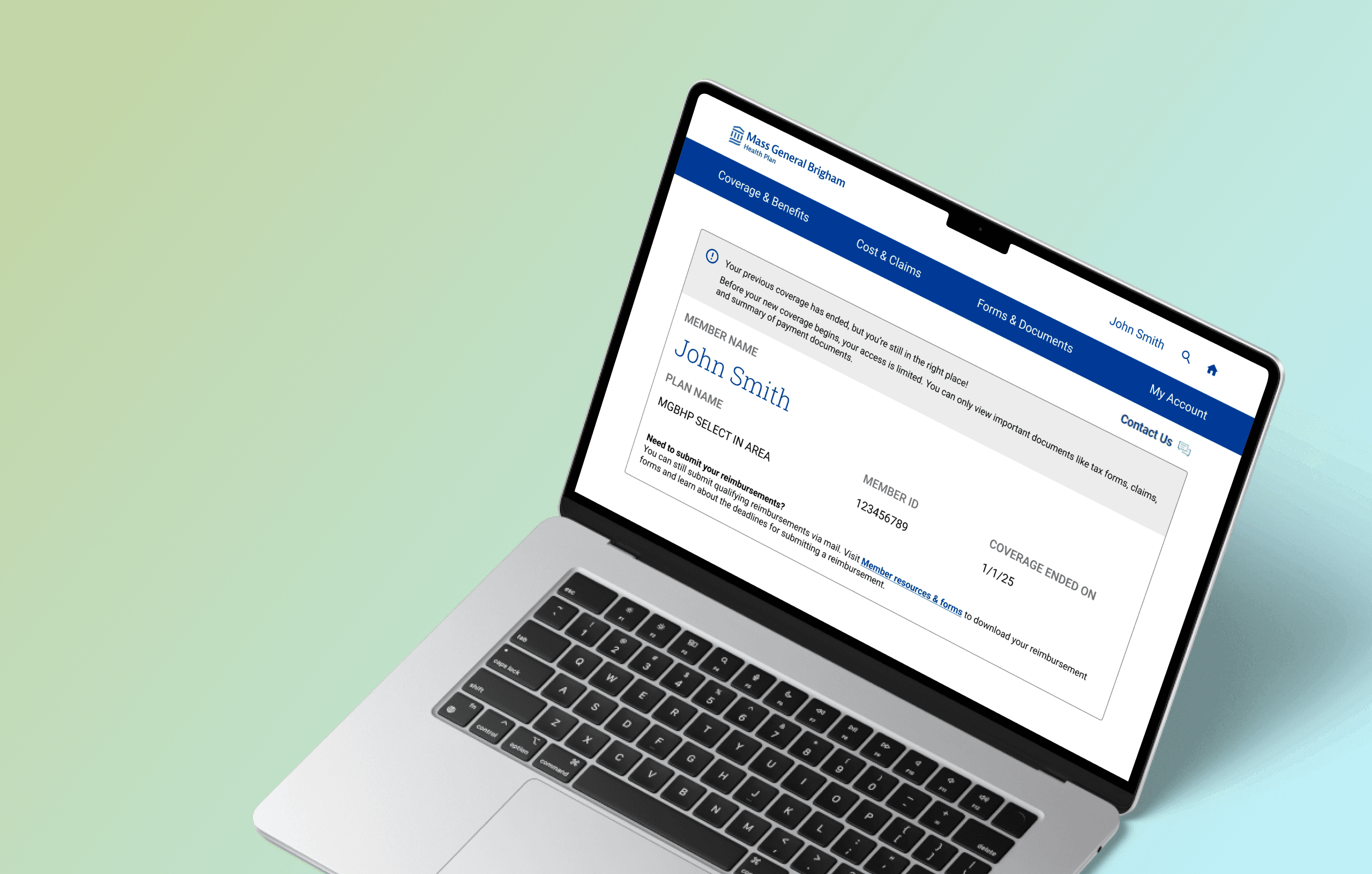
Every January, our customer service team faced the same crisis. Hundreds of members with expired plans couldn't access their documents and had no way to get them without calling in.
In August, leadership gave us until December to fix it.
Challenge
How can we empower former members to retrieve documents independently without relying on support?
Research & Discovery
Customer Service Team Interviews
Call Audits
Analyzed call patterns and request types to identify exactly what documents members needed and when
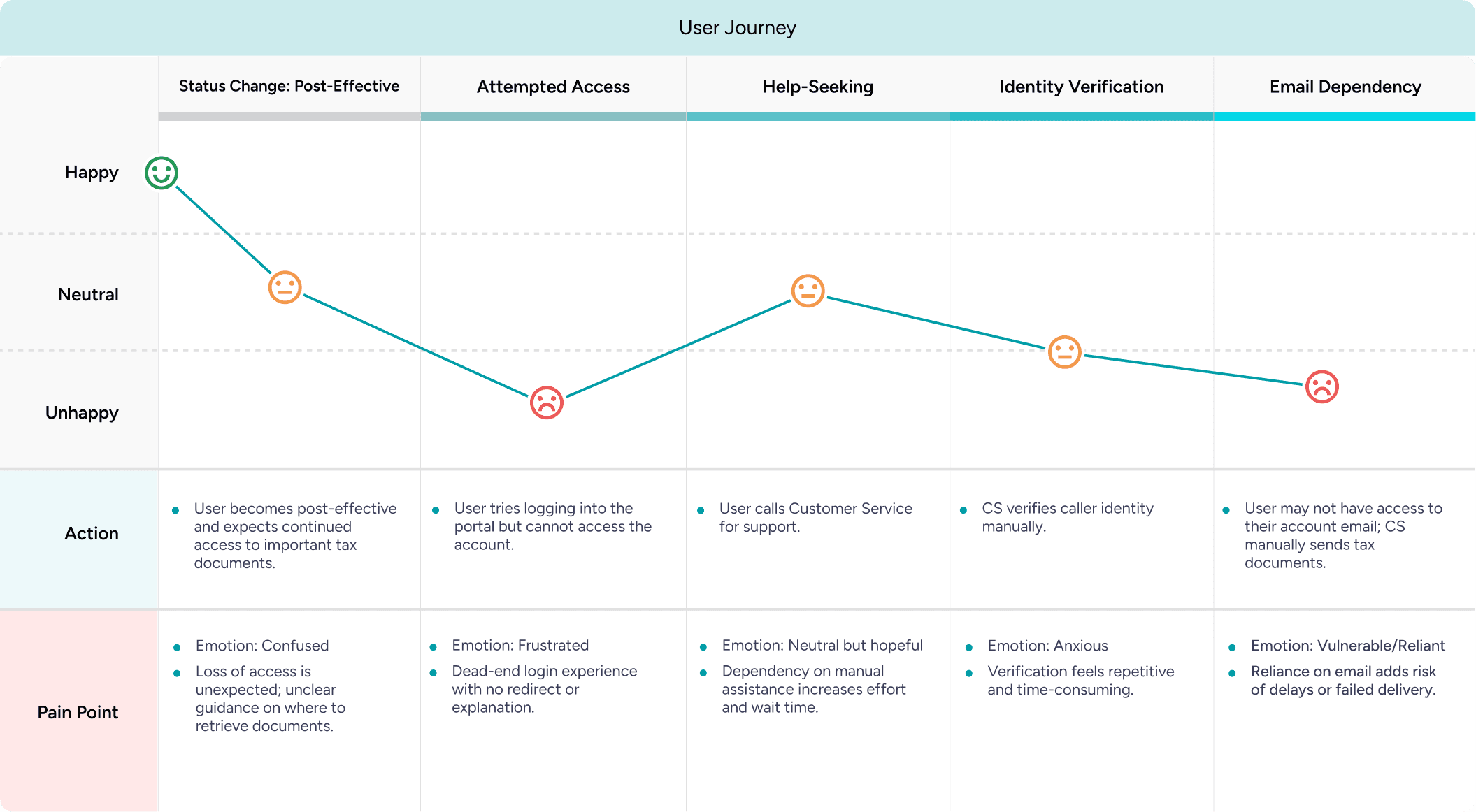
User Journey Mapping
Mapped the complete member experience from coverage expiration through document retrieval
Design Challenge
One of the biggest challenges at MGB was using a legacy design system that couldn't easily be updated. So instead of waiting for a rewrite, I found ways to push accessibility and modern UX patterns with what currently existed.
Key Research Insights
Members didn't need full portal access, they needed one thing: their tax documents.
The CS team manually emailed sensitive PHI, creating both inefficiency and security risks.
65% of members reported difficulty finding documents on the existing portal, indicating navigation and information architecture issues.
Design Principles
Collaborating within Constraints
Led weekly syncs with CS, Engineering, and Legal to keep designs grounded in what was actually buildable.
Clear Status
Highlighted membership status messaging so users could immediately understand what they had access to and why.
Self-Service Access
Empowered users to find and download documents on their own, no hand-holding required.
Solutions
Designing for the Moment Coverage Ends
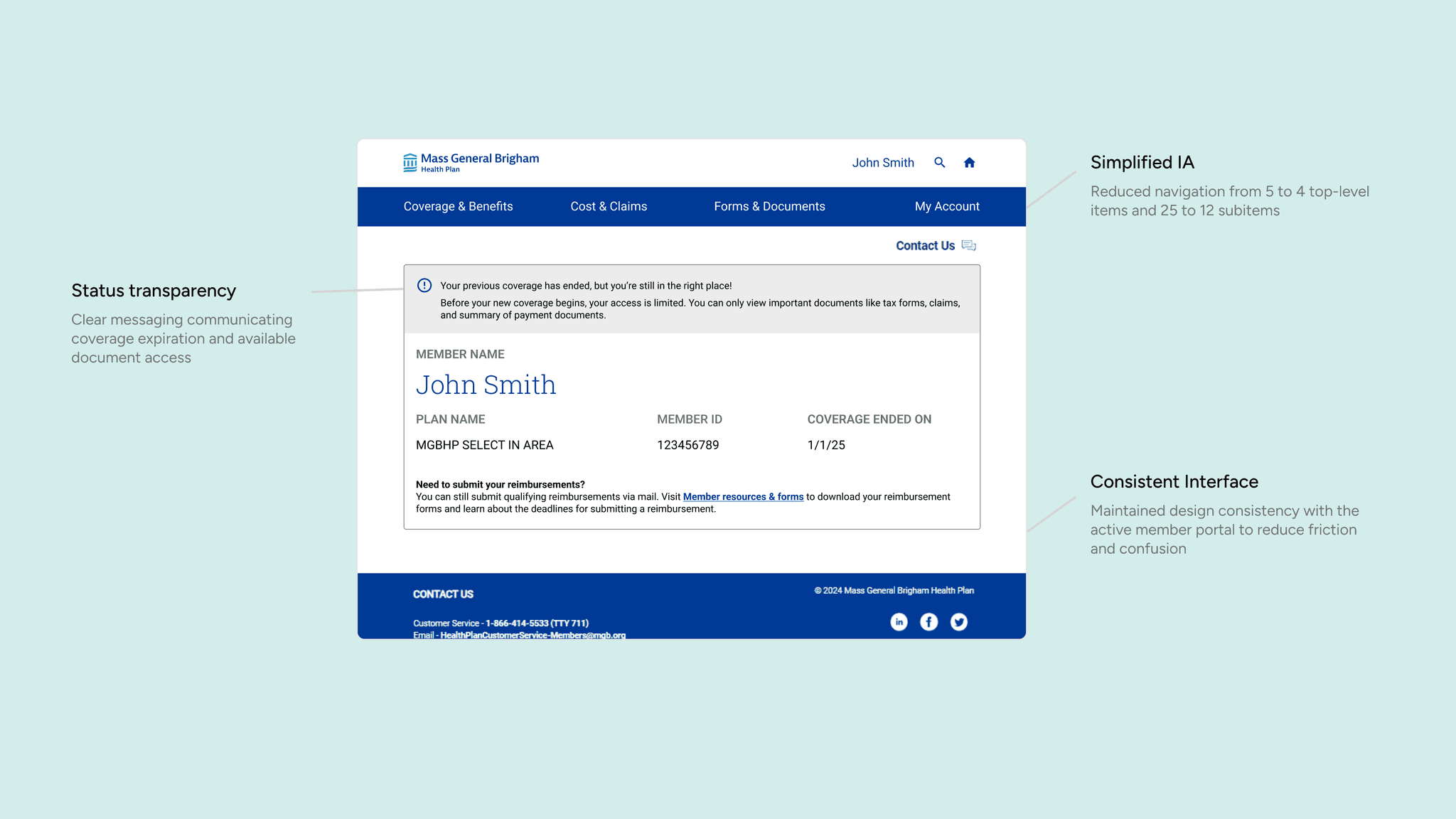
Status Transparency
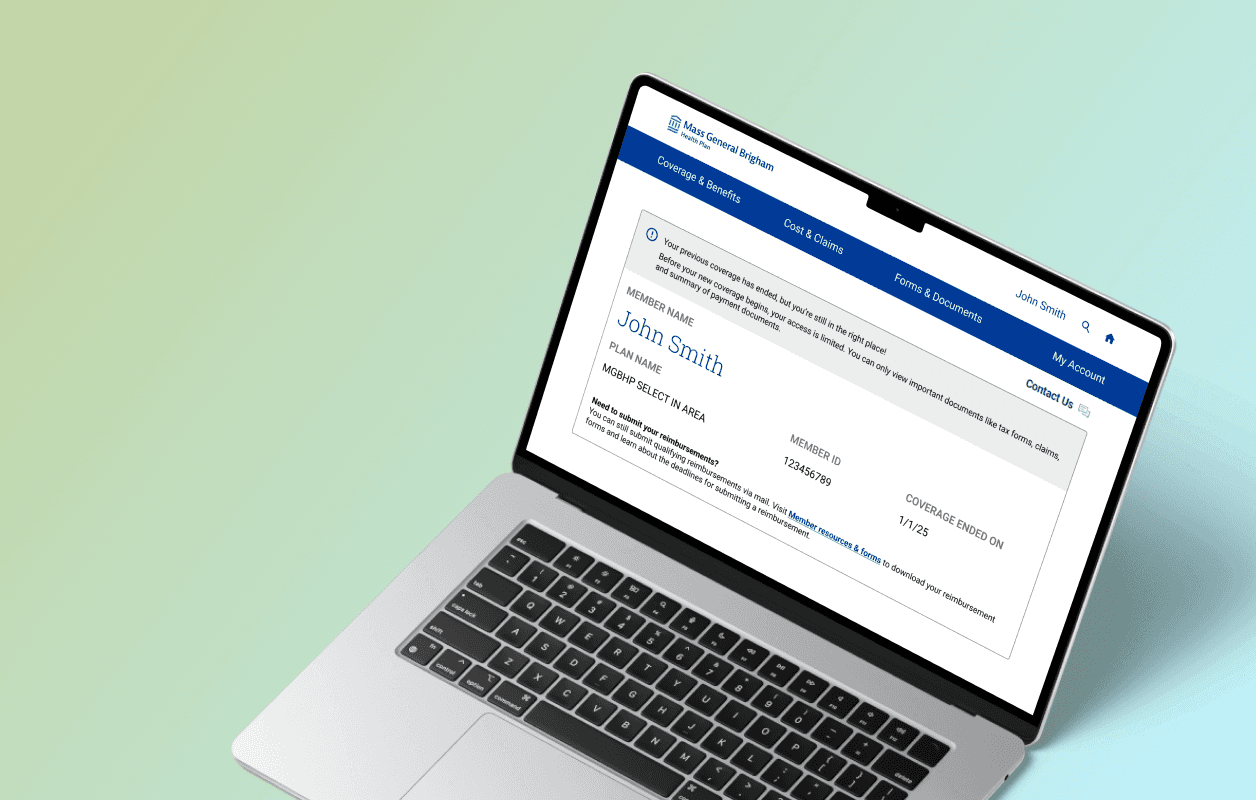
A banner at the top of the page immediately communicated two things: coverage had ended, and documents were still accessible.
Simplified IA:
From 25 to 12 items
Stripped the navigation down to only what former members actually needed, reducing 25 items to 12.
Consistent Interface
Kept the same look and feel as the active member portal so users could orient themselves immediately, without relearning anything.
Mobile-Web-First Approach
Rather than redesigning the native app under a tight timeline, we redirected former members to the portal's mobile-web experience. Same access, faster to build.

Socializing the Support Team
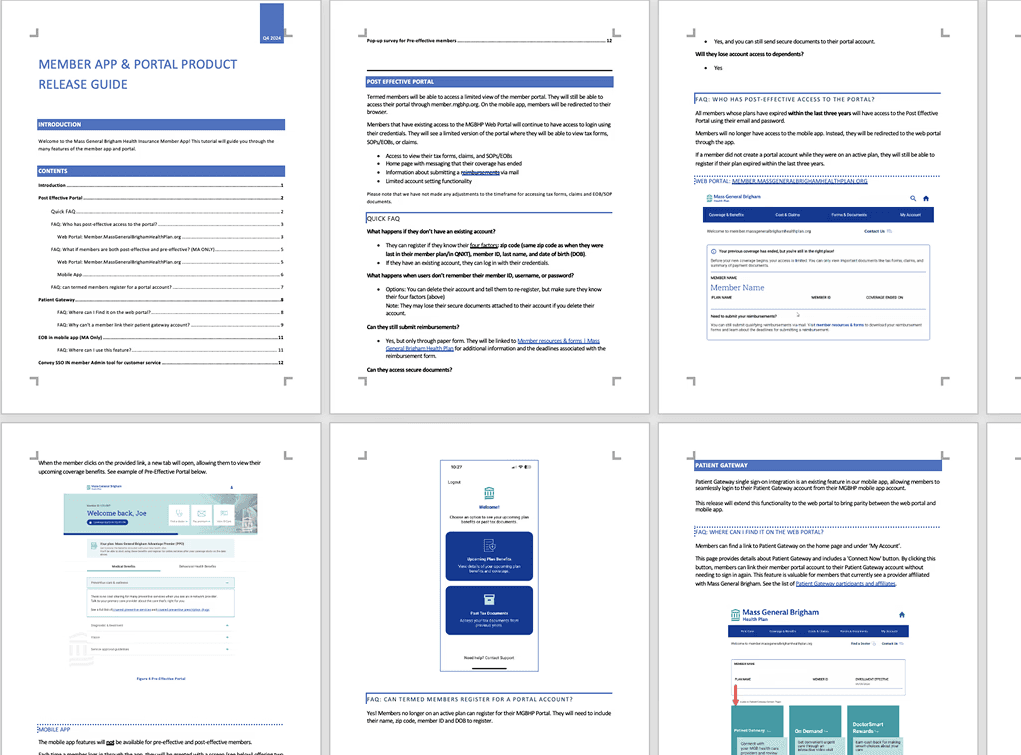
I created quarterly product release guides covering new features, user flows, and how to respond to member questions. They gave the CS team a shared reference so they could support members consistently without escalating every edge case.
Impact
“You should have seen the Teams screen today 'light up' with hearts and applaud emojis when they demonstrated the post-effective member experience enhancement. It has made an impact and less activity to CS as a result :)”
Customer Service Manager
45%
Reduction in tax requests (400+ → 222)
ZERO
PHI email transfers (down from 400+)
Biggest Takeaways
Security is a UX Problem
Manually emailing PHI to hundreds of members wasn't just a support burden. It was a security risk and a broken user experience. Solving both at once made the case for design as a business function.
Small Changes, Big Results
The visual changes were minimal, but the impact wasn't. A dedicated portal for former members significantly reduced CS call volume, freeing the team to focus on higher-value work.
CS Teams Are Underrated Research Partners
The most useful insights didn't come from user interviews. They came from the people answering phones every January. Treating their knowledge as data changed how I approached the problem.