Figma Hackathon
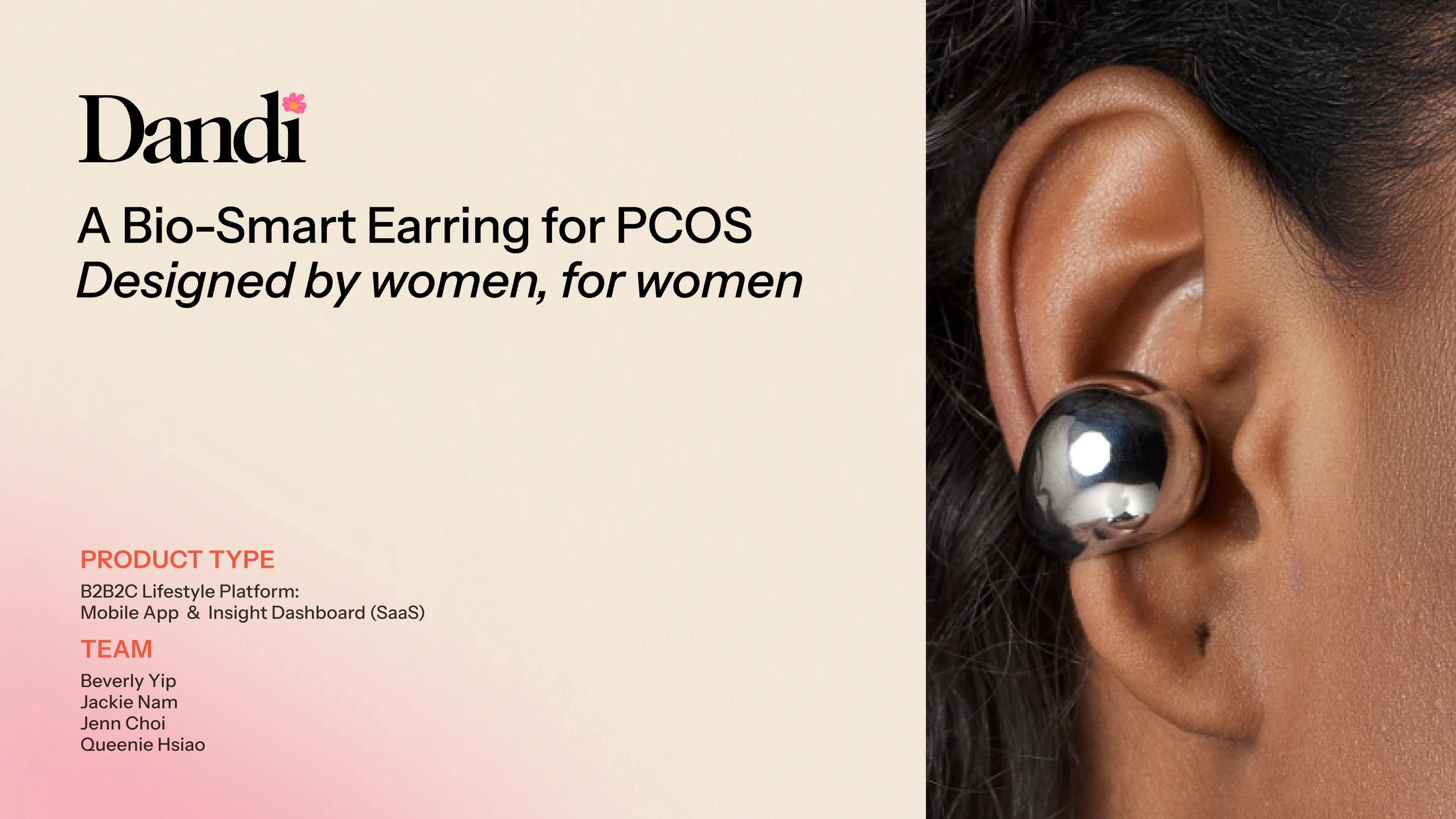
In 72 hours, our team of four designed a wearable and app to help women with PCOS understand their hormones. Out of 688 submissions, Dandi won Most Impact at Figma’s FigBuild 2026.
- Role
- Designer: UI/UX direction and the pitch deck
- Tools
- Figma, Figma Make, React, TypeScript, Claude Code
- Team
- Beverly Yip, Jenn Choi, Queenie Hsiao
- Timeline
- 72 hours, March 2026
- Recognition
- Most Impact, FigBuild 2026, Devpost
The Problem
In 2021, nearly 66 million women of childbearing age were living with polycystic ovary syndrome (PCOS). I’m one of them.
My PCOS journey started in 2018. Since then I’ve tracked it and seen multiple doctors, but I’ve never been able to stay consistent with my supplements, or get answers from providers. I’m still figuring it out.
Figma’s brief asked for a speculative tool that tracks and influences something intangible about the human senses. I brought my experience of living with PCOS, set the UI/UX direction and designed the pitch deck.
How might we help women with PCOS understand what their bodies are telling them?
The Design
Sensors In, Supplements Out
A silver ear cuff reads her body and delivers her supplements through micro-needles, so there’s nothing to swallow and nothing to remember.
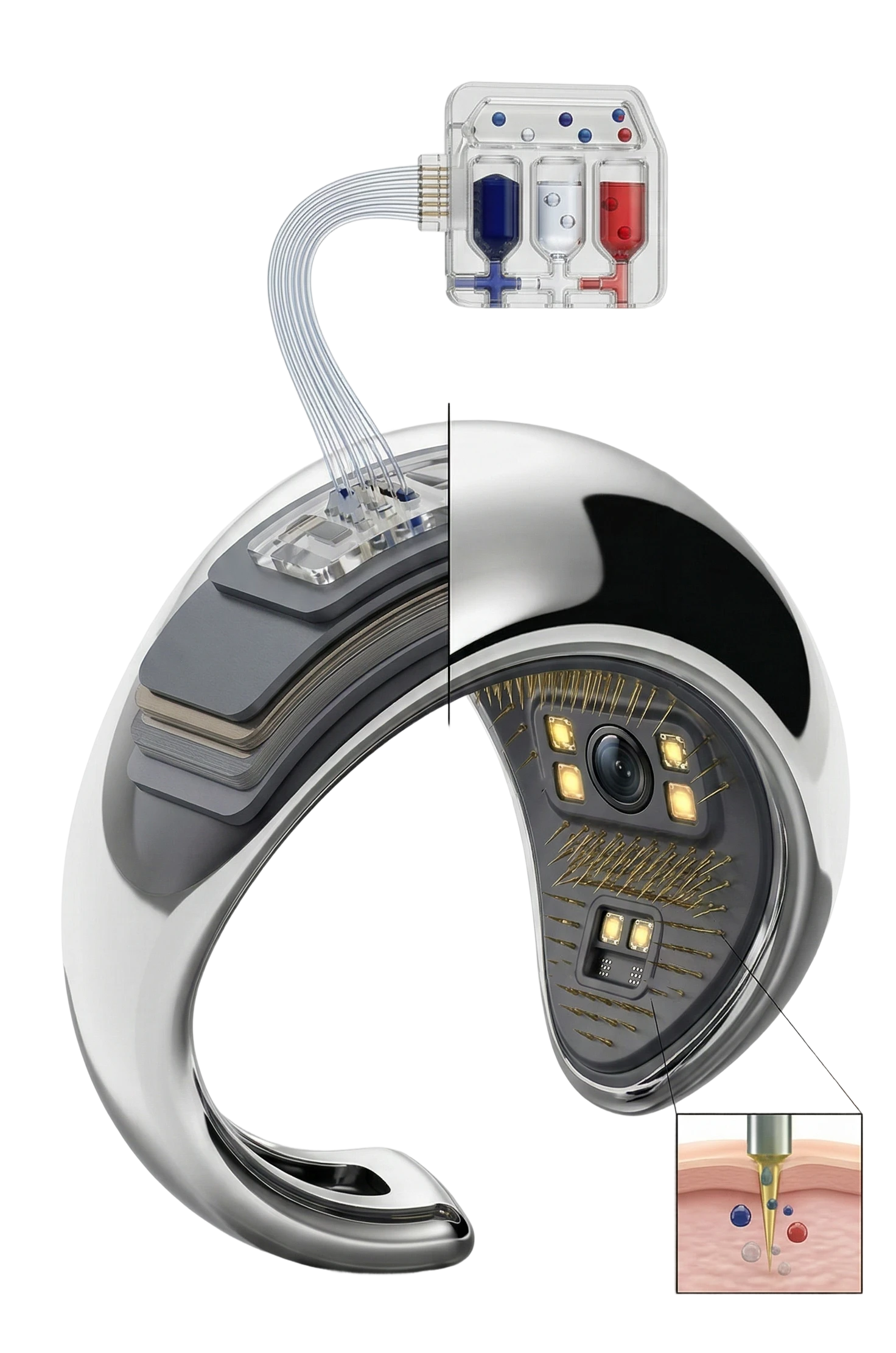
- Micro-droplets
- Hormone precursor A
- Vitamin C complex
- Cortisol regulator
- Biometric sensor array and micro-fluidic injection system
- Active sensor layer
- Micro-needle injector array
A Bouquet, Not a Dashboard
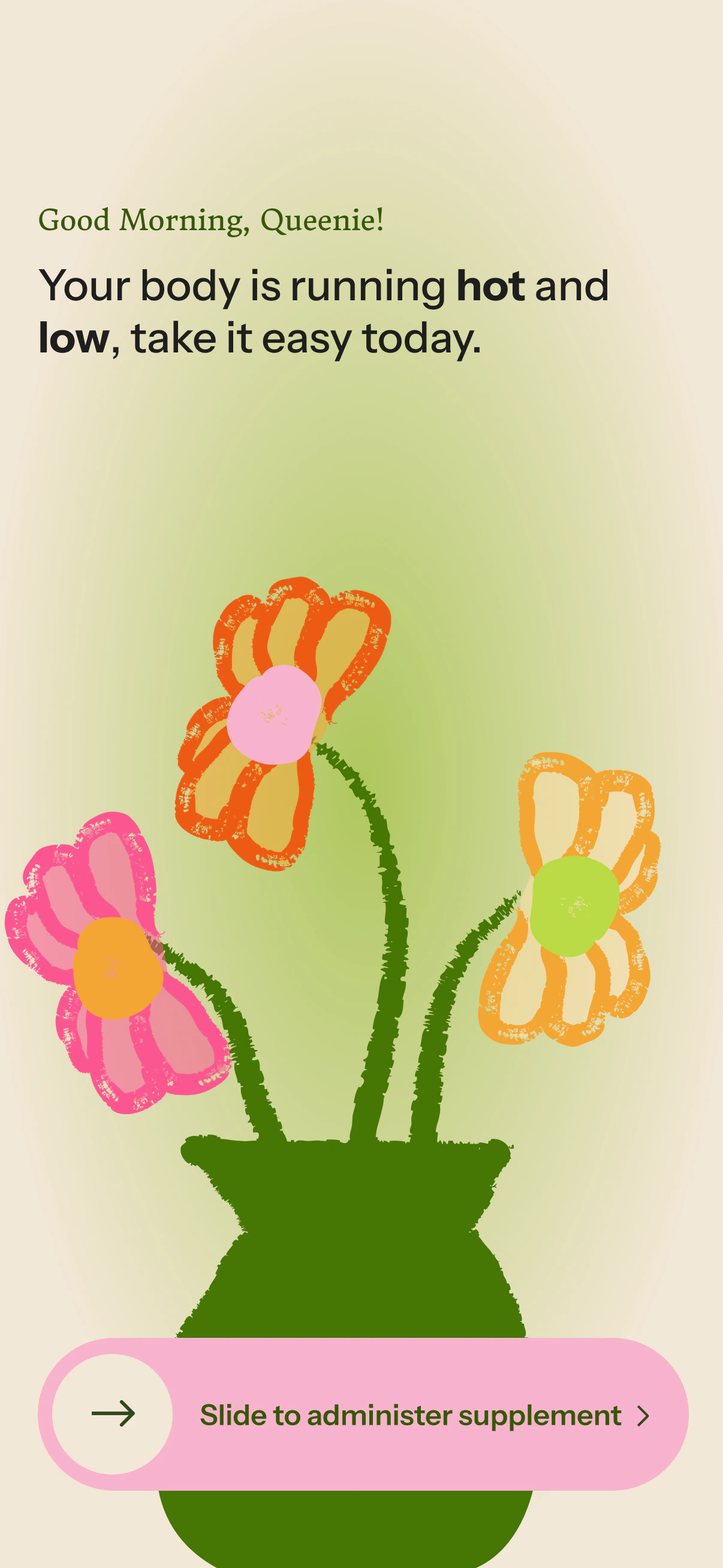
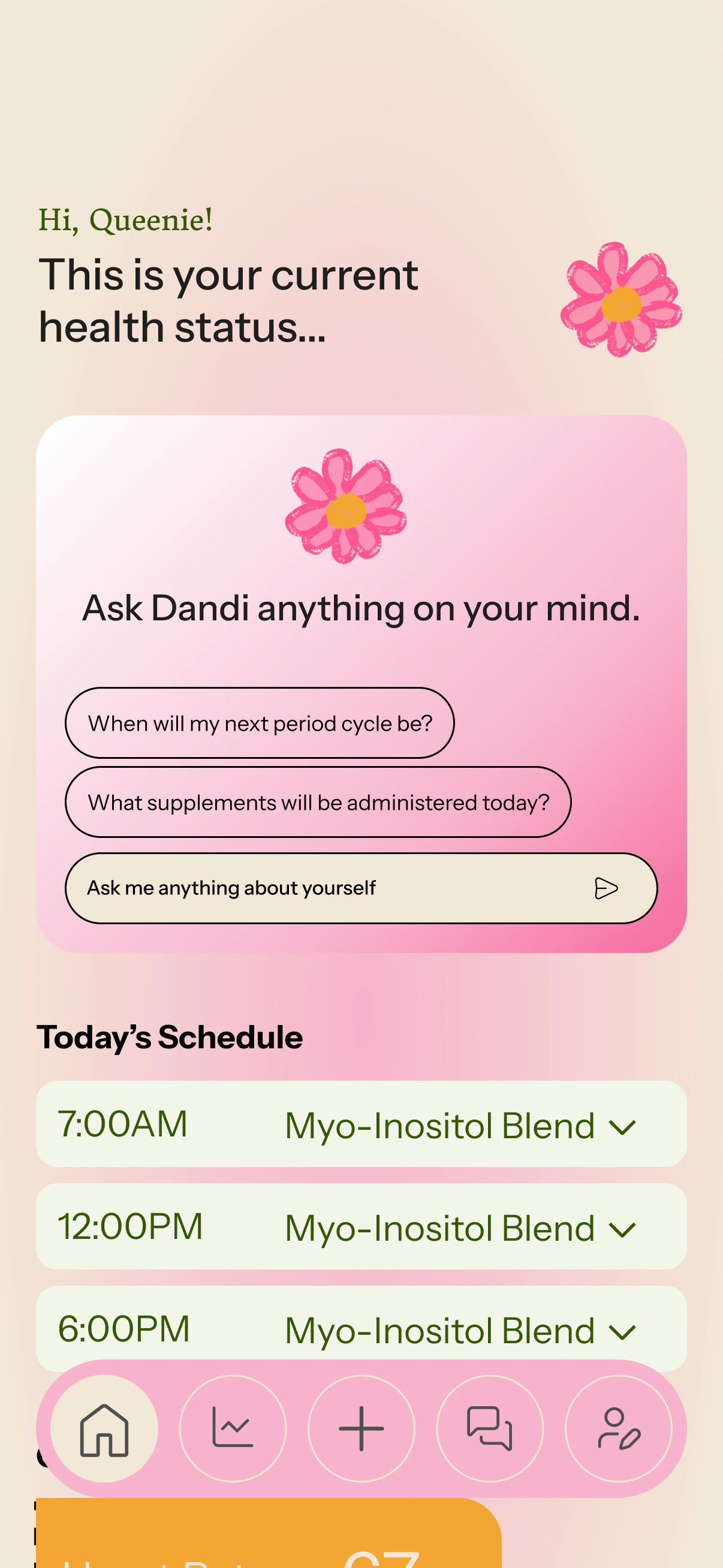
Staying consistent with supplements is hard, even when you know they help. So Home shows her day as a bouquet that blooms or wilts with her readings, instead of a page of numbers, and one slide takes the day’s dose.
Measured Against Her Own Normal
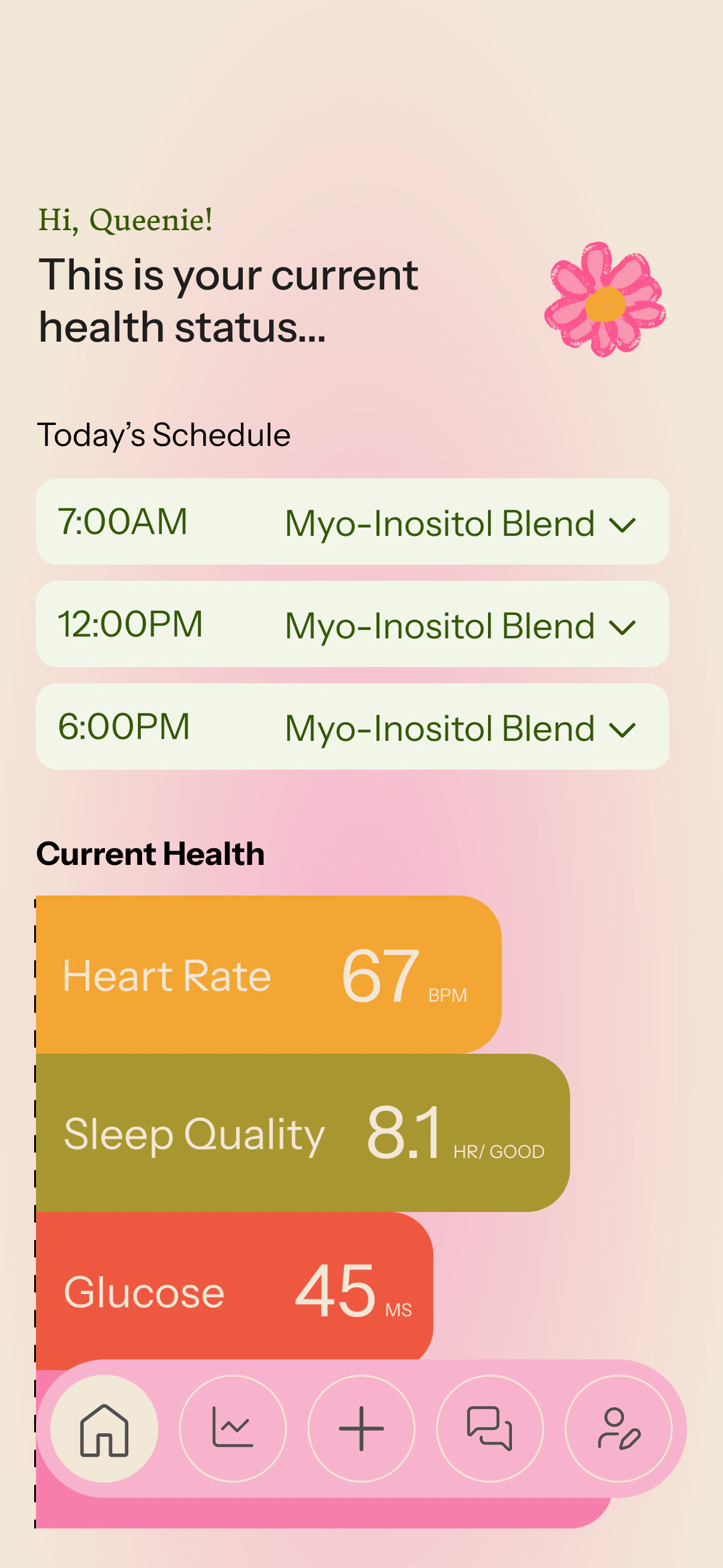
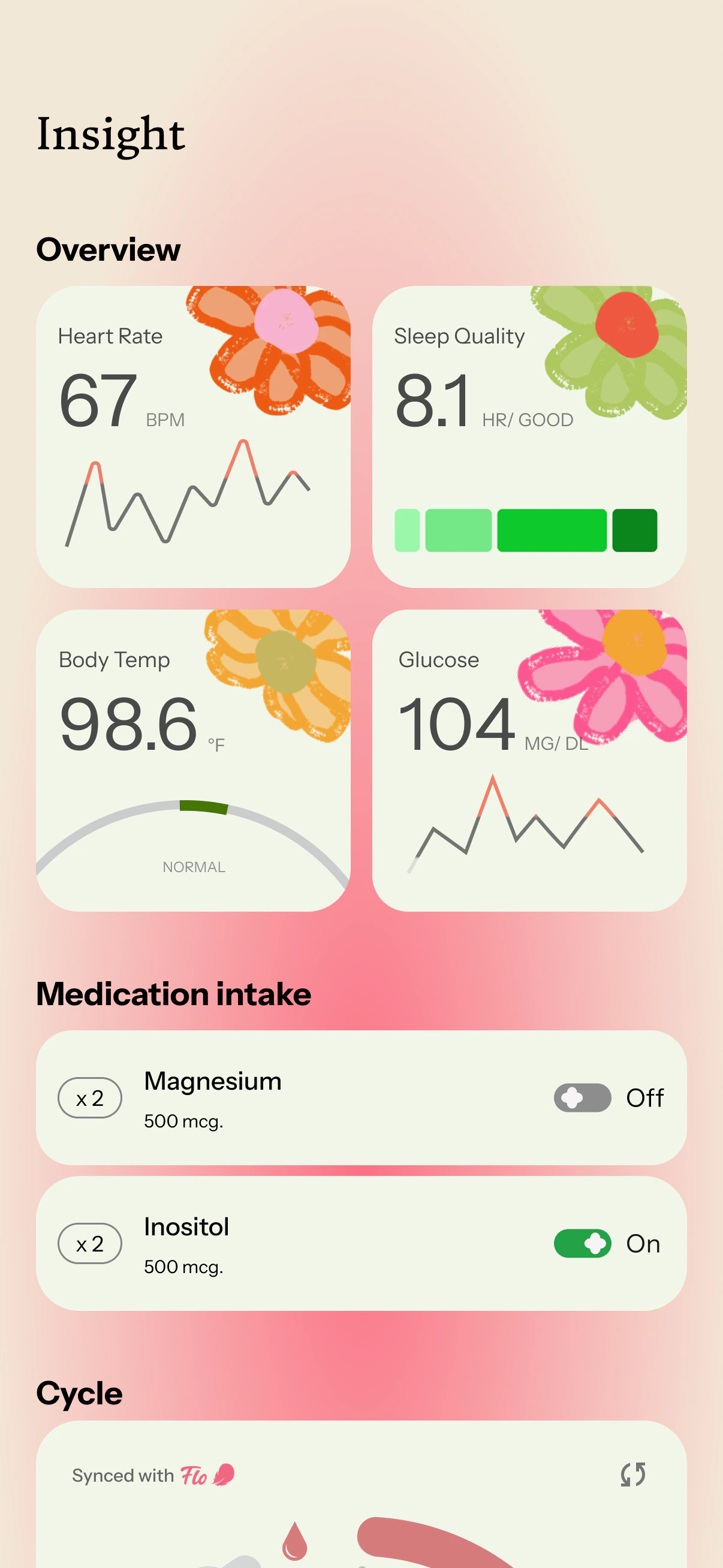
Providers rarely have clear answers, and every body responds differently. So Insight compares her readings to her own baseline, not an average, and when something feels off she can ask Dandi why.
Answers from Each Other
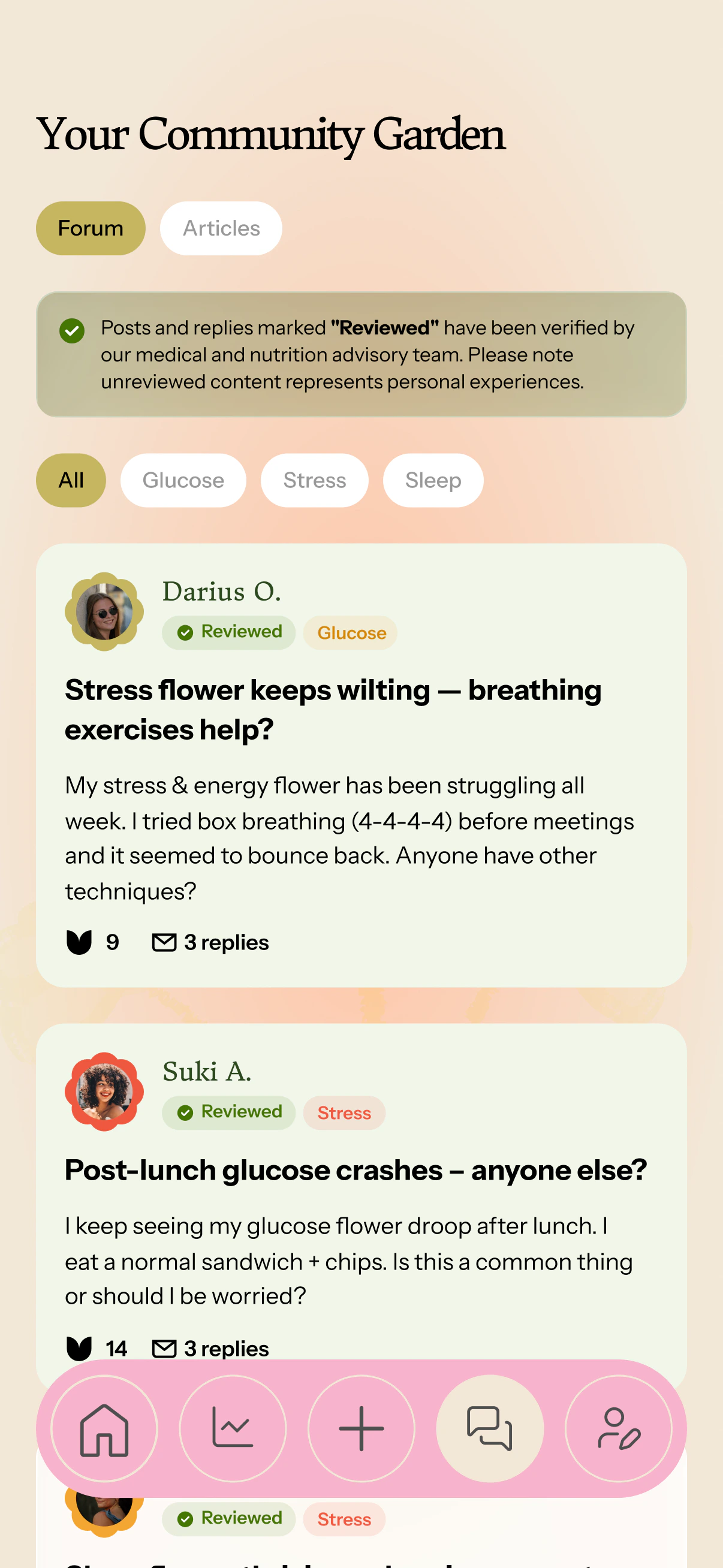
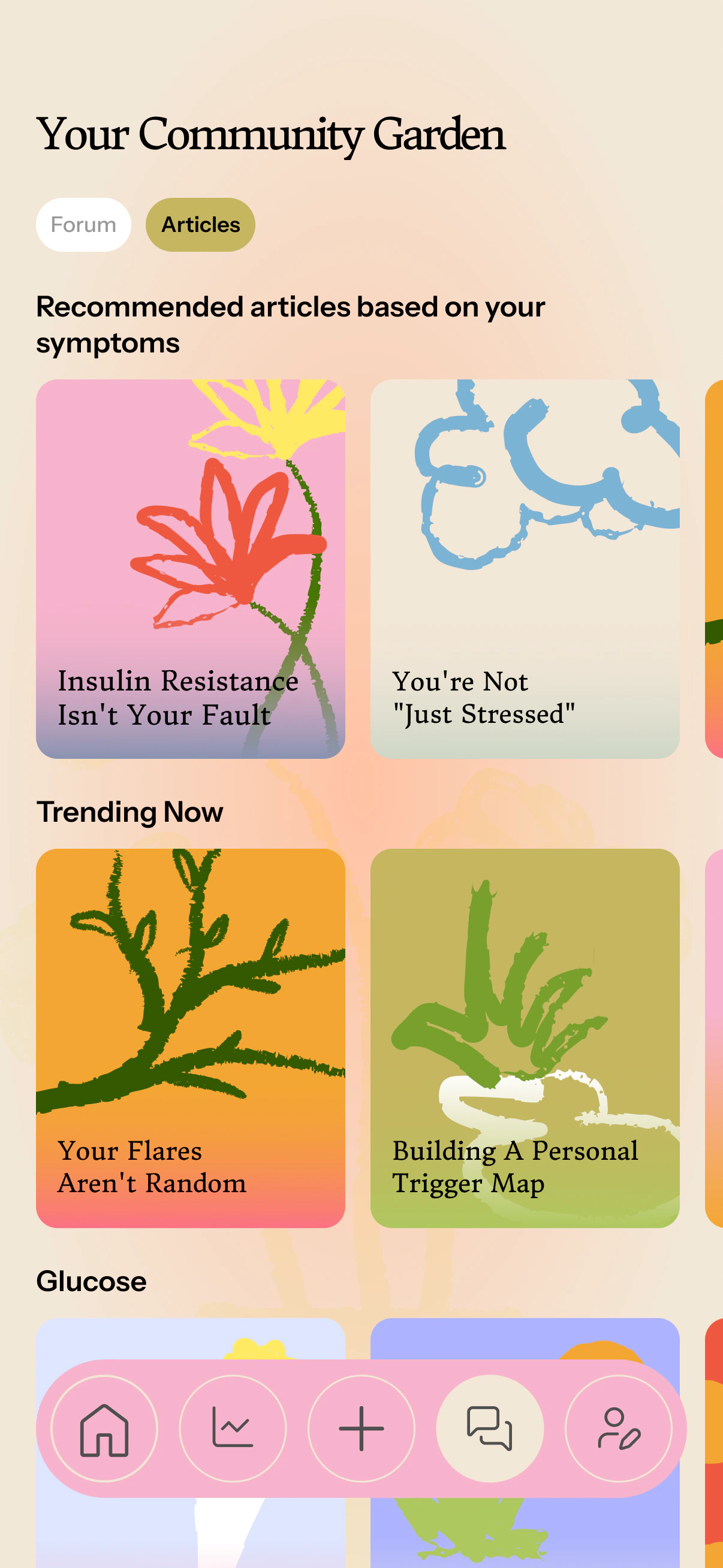
Without answers from providers, women turn to each other. Community Garden gathers their questions and articles, and answers checked by medical and nutrition advisors carry a Reviewed badge, so she knows what to trust.
Dandi is speculative, as the brief asked. An earring that reads hormones and doses supplements would need clinical validation and regulatory review before anyone wore one.
In Motion
Try the Prototype
Research
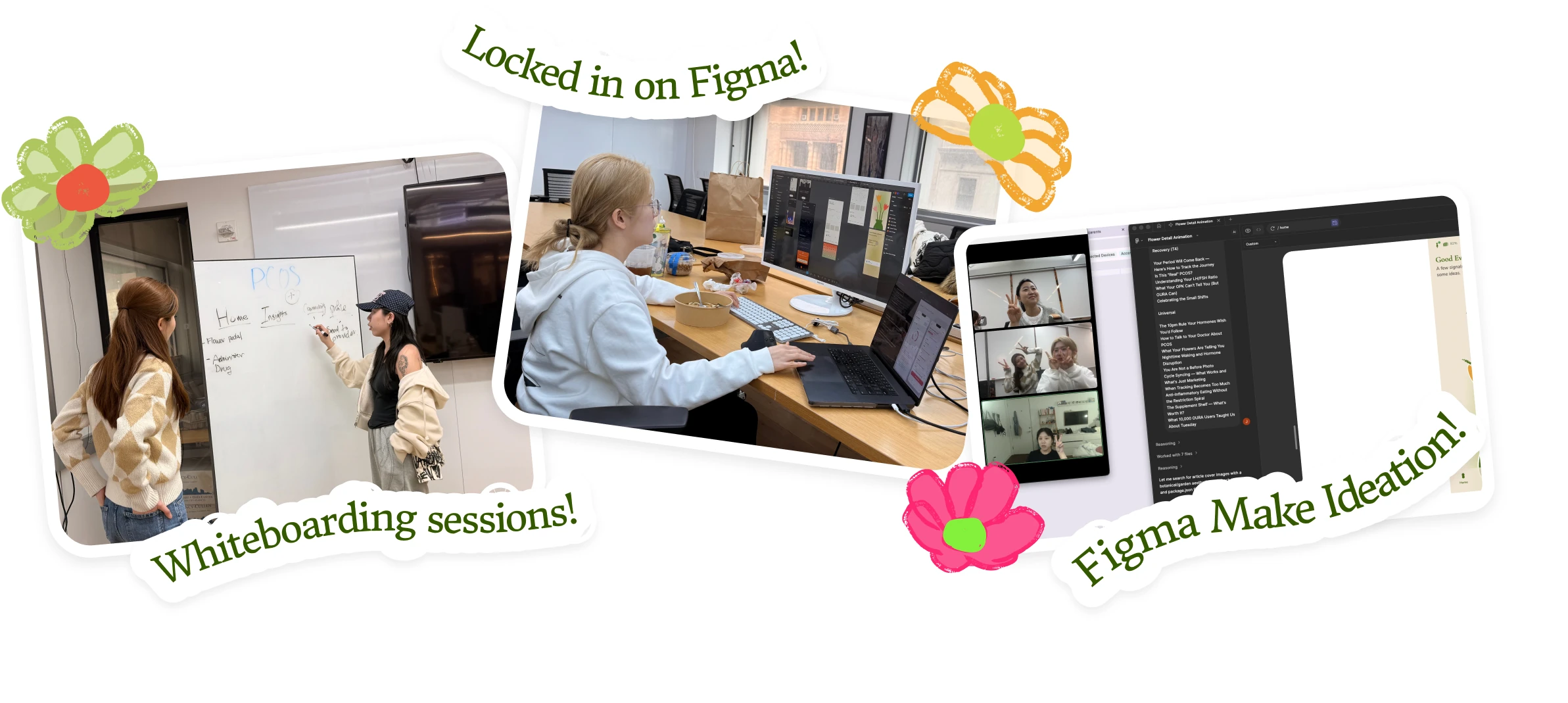
With no time to test in 72 hours, we worked from published PCOS research, our own experiences and user stories for her week.
Results
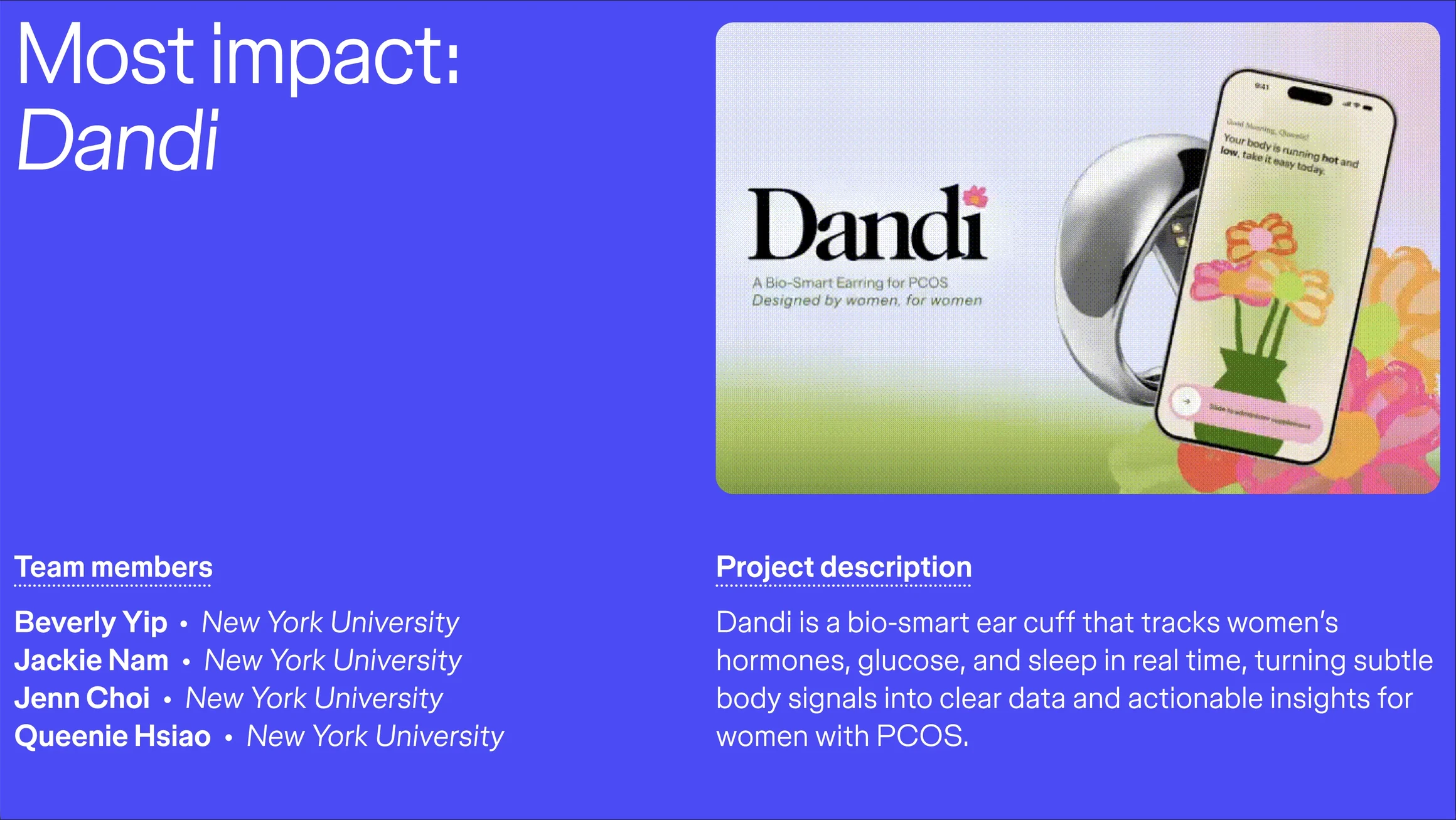
Out of 688 submissions, Dandi won Most Impact. The judges called it highly researched and impactful.
Reflections
- Designing from the Inside
- Being the user meant I caught assumptions my teammates couldn’t. Lived experience is research, but it still needs checking against other people’s realities.
- User Stories Aren’t User Testing
- With no time to test, user stories kept every feature tied to a real moment. But they’re our guess at her week, not hers. Testing with women with PCOS is the first thing I’d do next.
- Impact Came from Specificity, Not Scope
- We won Most Impact not by covering everything PCOS touches, but by doing a few things with care. I carry that into how I scope every project now.
Notes
- Global burden of polycystic ovary syndrome among women of childbearing age, 1990–2021, Frontiers in Public Health, 2025, from the Global Burden of Disease Study 2021.